Sunday, April 4, 2010
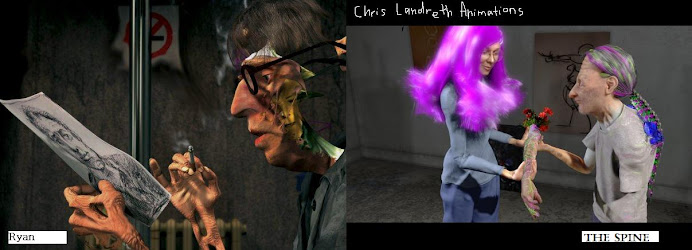
synesthetic experience
I love this its so beautiful, one of the best visuals Ive seen I believe, and then the Ruby Suns with it makes for a perfect combination. I love

Monday, March 29, 2010
Appropriation_ Molotov & Ecstasy
In relation to the Molotov Man article I am leaning toward Susan Meisalas opinion however I definitely understand and even agree with both sides. I think in the age of modern media, internet in particular information and art and everything is very readily available. Too readily available many argue. Information is distorted by opinion blogs people assume is journalism (as I am looking at in my media ethics class) and art, like Molotov Man, can be easily lost, and re contextualised.
I definitely feel for Susan, and strongly agree with her argument, that if art is becoming lost amongst the technology of this day and age. We artists should embrace each other, come together as people and respect each other’s ideas. Joy was made aware of the work, and I don’t think she handled the situation as best she could have. Not to say she was wrong entirely, I just feel as though they could have come to an appropriate agreement.
That is I do believe it is ok to recontextualise work, that Molotov Man can still have as much meaning for the original image, even when he is used for different meaning and purpose by Joy. There was no intention for deliberate harm by either or the two artists, they are both right. But I do want to stress that we are as people being overcome by the modern age, maybe we should make a stand and instead of falling and becoming lost, embrace and come together, to respect life, love, people, music and art. There are things much more beautiful than anger, technology and negative notions of disabling our ability to share, that we can focus on in this world.
In relation to ‘The Ecstasy of Influence’ I think, as the reference to Bob Dylan’s music being a paradox; it is very important to consider the idea that appropriation holds a lot of benefits. As it allows the contemporary audience to reflect on the importance of words. Or another positive is focussing on the new meanings that can be created. Hopefully the new artist reusing work does it in a respectful manner to the old, and it is probably in most cases best to still refer to where the idea came from. But the point is that there are a lot of positives about appropriation that should be more often acknowledged, people can find balance, and draw less upon the negative connotations of the word plagiarism or appropriation.
I like how the ecstasy article, explores broad examples with depth, to stir the mind on these matters. The idea of photography’s initial question of plagiarism and the ideas of the want for Plagiarism as it has brought such timeless tales such as Romeo and Juliet and Southpark ha-ha. I love that those two stand next to each other in a sentence by the way. =P
I love the that “when damn near everything presents itself as familiar (in this modern age) – it’s not a surprise that some of today’s most ambitious art is going about trying to make the familiar strange.” An idea referred to earlier in the text, talking about, how art recreates objects “thingness”. A statement I agree with, on the notion of how much we as people miss, or assume to be true, and the ‘things’ we become disembodied with because of our familiarity with them. Association therefore is beneficial in that it resparks old likely forgotten ideas that are still necessary.
I understand the ideas for the need of copyright laws, but I think the ecstasy argument is very true. There are many benefits to appropriation and many disadvantages to copy right, such as (as mentioned in text) not being able to play ground music in public. Music is such a beautiful element, I would much prefer to share than to not. That is a naive statement as I am only considering what I would like, not what is necessary. However the restrictions on students photocopying that could be valid to learning is a better example of a definite, (kind of ridiculous as its likely not a commercial concern) destructive attribute of copyright laws.
Basically I like what Thomas Jefferson said considering copyright ‘a necessary evil’ as “he favoured providing just enough incentive to create, nothing more, and thereafter allowing ideas to flow freely, as nature intended”. Though I do want to add this statement seems a little naive also, as though and I hate to say it, but we do not live in a perfect world, and there are surely benefits for copyright laws to help artists when work is being stolen in a negative manner. This is to say I agree with the article, however like to consider more opinions, as 1. There is never one answer, and 2. I feel as though Jonathan Lethum is little acknowledging the fact that we don’t live in a perfect world. There are people who would use copying in a negative case that copyright laws could protect the innocent: i.e the laws have purpose. But I do believe strongly that one works reuse to create new meaning is a fine and beautiful thing.
And to finish, with irony, by using a quote ha-ha, I again think Thomas Jefferson is on the right track saying “He who receives an idea from me, receives instruction himself without lessening mine; as he who lights his taper at mine, receives light without darkening me.”
_I went on for way to long I’m sorry I’ll end it here. =) Peace
Oh, P.s. want to point out that I feel out free ability to express opinion in blogs without stress on need of a big reference sheet, like in essay writing: has benefited my individual to learning. I enjoy writing, these blogs sparking new thoughts to consider in my mind. I have learnt a lot from these readings and writing the blogs, and I believe it is the ‘freeness’ of it all that has helped me enjoy it, therefore really learn.
Saturday, March 20, 2010
Reflecting on the Saturday 'Long Take' Shoot
I had an enjoyable day, my favourite part was probably walking through the trees for the little red riding hood shoot haha, but I guess that’s not the point of today’s blog.
Since I’ve worked with a Bolex before and developed many times, I didn’t get to be that interactive which I guess was a bit of a shame for me, but we all need to get a turn, so that’s cool. =)
I sometimes felt a bit outside of my group, when I did speak up about ideas I didn’t really get listened to I sometimes feel. But maybe that’s just me not explaining myself properly. Also I think it could be because the boys have a kind of different state of mind to me I guess, which is fine. They just like to get things done, and don’t I guess worry so much about the meaning/purpose to the story or the imagery, representations we could think more about working with. But I don’t think that is a bad thing necessarily just because it’s different to the way I would normally go about things. For example, today’s idea I felt was great, it was sweet and simple, funny, and had a nice unexpected ending. One suggestion I made that I kind of would have liked to include, just because I find studying human behaviour interesting: was to start with a shot of fidgeting feet, and then move up to the hands. I just think it’s interesting, how people keep their minds active, and themselves busy, when bored or in awkward situations etc. And then to move up and back to reveal the bus stop sign, and then move back more to allow the ‘man bus’ ha-ha to come in. I also thought that could have given us more variety of camera work. But, that would have meant Josh wouldn’t have been in frame to include the comedic trip, which was a great touch.
I love the Bolex, I love the look of old film, (I really wanna get myself one of those little cameras we also got to play with, just quietly hahaha), and I love the concept of doing entire works in one long take. It’s a challenge and it feels really honest to me. That might not make sense and probably sounds stupid ha-ha. I just mean that, if I see a short done in all one take, I know it’s honest, that is it hasn’t been cut up and manipulated. I particularly find this technique best effective in documentary or any non-fiction type film for this reason, just personally anyway.
Sunday, March 14, 2010
48 hour video race ~ Ideas...
In a rush theres a video for some of my ideas, I feel like they will keep building so the blog may also with it, but thats where I'm at for now anyway...
Peace be all
Friday, March 5, 2010

Monday, March 1, 2010
2nd response Scratch Film Junkies
I definitely had an entirely new experience watching another Scratch Film Junkies work for a second time. First of all I felt although that there were still a variety of techniques I couldn’t for the life of me put my finger on what they were with complete confidence. But there were definitely material elements of the film I could now relate too, or better presumed. For example, use of magazine transfer in the beginning, arrow animation, pattern prints, paints/oils (though seemed a thicker but still glassy looking – looked possibly acrylic but I wouldn’t have thought so from remembering way back to 1st or 2nd class when Andre said careful not to use too thicker substances so that it doesn’t get caught up with the sprocket holes]).
So I suppose on a level as simple as being able to relate to techniques made my experience more enjoyable. As my previous blogs dictate my opinions are forever developing (for film and life ha-ha). This shift in opinion also greatly changed my experience. I mentioned scratch Film Junkies in a couple of blogs but I’m glad we have had the chance to speak specifically now on our new opinions, as I felt it is a subject I wanted to retouch on. – Our studies on synesthesia, our practises in making our own experimental and our study of experimental artists have all started me thinking.
I have regained appreciation for the story telling behind abstract, and the importance in the knowledge that it is up to each individual to gather their own interpretation – and that that is the beauty of it.
I definitely feel for example our 1st experimental had a story, and I’m sure if I asked someone to try and guess it, its possible they may, but I would also love to hear what they can see in it. Whether it were the colours, or the material representations, and whether or not they had a whole new meaning when projected I saw definitely saw our story come to life, and I loved it. As an example I used newspaper in one small part, to represent people today, I splashed a little red because I do think newspapers and their reflection of reality can be a little chaotic, but it was only a flash of a moment in the story amongst the sunsets and growth of life we considered to be important to this world as we currently know it. I wander now what the scratch film junkies use of magazine print meant to represent, possibly the something similar, probably something entirely different. Either way my second experience has definitely been altered, and I believe for the better.
I appreciate life so I’m glad I have come to re-find this appreciation for experimental. Not to say I have become totally taken, my style and thoughts from before are still around. However, experimental techniques are broadening my horizons for visual effect, and though I believe in everything I make having a clear message for the viewer, who’s not to say I can’t spread a strong message through experimental anyway.
Before I go here’s a quick list of the “I loved”...
- The underneath film of the man speaking inside the paint and scratch
- The green cellular looking figures
- The star and dot patterns and arrow animation & magazine print
-The thicker paints effect- could even have been nail polish like I noticed one of the girls in class used or inks mixed into oils maybe
- The 2 film inserts (plane on runway underneath & the man who looked drawn in, in some ace card looking world
- Some sort of technique that gave a stain glass looking effect
- & definitely Loved the dancing fox stuck in sand at fin
Speaking of which thats fin for me too haha good night
Thursday, February 25, 2010
In addition to Sound: Natural Born Killers
Just thought I'd add that I was watching Natural Born Killers the other night. And I thought the part only about 1/2 hours in, where they do a take-off on those classic American sitcom TV shows like Leave it to Beaver and Father knows best. The reason I mention this is because in the film the 'sitcom technique' is used as a point of contradicting the whole idea, by reflecting the reality of her screwed up family life in the TV take-off.
So in relation to sound I just felt it was relevant because as I was watching it it got me thinking. As a technique of sitcoms is to use the sound of audiences laughing to provoke the audience behind the screen to laugh. I found the effect of the audience laughing over the screwed up issues the girl is subjected to in the reality of her family life, to be very effective. For e.g. her father is abusive and as he touches her inappropriately the technique of the audience laughing makes the viewers behind the screen think then about the hardships of reality. And I suppose also about how greatly unrealistically family life was reflected by those sorts of shows in the past. Which probably to some degree created pressure on society to feel a need to live up to those morals of perfection. As audiences were less aware of the deception nature the media can have, in comparison to today.
Anyway I'm going off topic ha-ha, I just thought this was a little idea I should share.
Monday, February 22, 2010
Chion: Projections of sound on Image
I love the quality sound brings in its ability to enhance the
“...immediate remembered experience...” (pg 5, Chion reading)
Like synesthetes associate sounds to colours or waves, I feel it is a common association amongst people to relate sound to memories. Whether it be a simple set of beats that spark a forgotten memory, or a cherished past time that will forever remind you of a particular song, there is a definite relation. Also, as the reading includes in the latter, sound associations with culture such as the powerful pulse of drums relation to African tribal life. I have always had a general intrigue to how and why sound affects memory particularly; so the Chion reading was interesting and beneficial for me in that respect also. On the topic of synesthesia again, I want to acknowledge Stan Brakhage’s effect of excluding sound; which I would consider to also add value via technique of absence. Though we are aware Brakhage is encouraging personal sound to be provoked from the visual alone: I believe viewers (without knowledge o f his intention particularly), could also gain the awareness of sounds importance of effect on the visual (i.e. sounds absence generates realisation of the effect of no sound, to inspire inquisition to this topic, the value of sound).
“Sound in film is voco- and verbocentric, above all, because human beings in their habitual behaviour are as well”
I think this statement sums up the textual element of sound quite well. In my screenwriting class we were discussing precisely this idea. That in reality we are guided by vision in collaboration with sound. Therefore a common technique, to create a believable sense of surroundings for your audience, is to use sound to ‘set the scene’, before the visual is even shown. A simple example being use of the sound of steam train rolling in and exhaling it’s steam, creating the immediate assumption the scene is at a train station in a period somewhere between the late 1800’s and 1940’s (i.e. synchresis).
I didn’t know specifically that “the ear analyses, processes and synthesizes faster than the eye.” (pg. 10) This is interesting though, confirming my understanding of how fundamental sound is as a means (in reality and film) of heightening our awareness of our surroundings. The subtle messages of lyrics (as subtext) in a film may provide information regarding the way a character is feeling for example. We miss so much of the world as human beings due to our inability to be able to accept all information in our consciousness. The collaborative function of our senses informs us; our ability to see and hear being central components. This therefore must be considered in our expressions of reality, or inventions of believable normal world.
My background in television production in Australia is forever drilling the importance of sound into me. The producer and then visual director have the ultimate say, though often (particularly in live production) the Sound “super” aka director is often open to have a very independent direction of their own. So via my experiences I feel I have a decent understanding of how vital sound is. In an etude I had to direct for one of my studio prod subjects for example we had to create the story purely by visual and sound language (music and effects etc, no dialogue). The final project was greatly influenced by the Sound directors live choice of sound. He had been away for multiple rehearsals so had little knowledge of the story and especially not the back-story etc. It was interesting to observe in the end how much of a differing effect the original scripted sound had on the audiences perception of the story, to their interpretation from sound captured on the day.
Monday, February 15, 2010
Wells Theory of Animation
As my present knowledge, practise and understanding of animation and experimental film grows, so do my ideas and appreciation of it. There are certain elements of avant-garde films I consider myself to appreciate the most. The idea of the literal use of material objects to inevitably create multiple interpretations. I think the poetic relationship between image and sound that experimental film dictates is beautiful. The untied opportunity to ‘experiment’ with multiple styles, continuously enabling new opportunity and growth in the art has me perfectly enthused. I think the idea of presence of the artist is interesting in relation to experimental art.
I do also appreciate the orthodox more structured styles of animation. Simply due to the fact that I believe it has been beneficial for the world in that the art has brought so much joy and entertainment to such a broad range of audiences for multiple generations.
Wells theories I am fascinated by and certainly agree with. I cannot deny my restored and growing appreciation for the art. As mentioned in my previous blogs, I still have that barrier withholding my complete acceptance of experimental works. The voice in the back of my head basically saying that abstract art has no sense or meaning, the classic ‘I could have painted Picasso in kindergarten’ idea (by the way has anyone seen the documentary ‘My Kid Could Paint That’?) However being myself and not my dad I am continuously striving to question my thoughts and listen to alternate ideas to grow and not be stuck on one set of ideals. I want to always be shaping myself as a person to gain the best understanding of myself and therefore the world around that I can. So I feel it best to not deny my past and current ideals (because they will be beneficial to my own artistic storytelling as they are a part of who I am), but to embrace the open-minded side of mine to further allow myself a new understanding of something I’m forever growing to perceive as a beautiful art form (if I weren’t to embrace that I would be none the wiser).
Wells noted on page 45, “... colours, shapes and textures evoke certain moods and ideas...these aspects should give pleasure in their own right without having to be attached to a specific meaning...” This statement and the understanding I’ve gained from my practise in experimental animation further confirm my love for the art. The visual sound and diverse interpretations that can be generated from the literal flow materials an artist makes rhythm of on film is something beautiful.
Things that stood out to me:
The evolution of materiality in experimental – I love that one material may mean whatever the artist interprets it as and that the audience may gain an entirely different message again.
For example in the dark room my necklace to me represented genes in the development of growing life, and this story can be gather by combining the materials surrounding it to tell that story. I am intrigued to hear what other people concluded from what we create.
I love the concept of the rhythm of experimental animation being a Visual sound. Though Wells noted the importance of a musical relation in experimental, I like to think about the actual concept of it creating its own visual sound, as Stan Brakhage demonstrates by excluding sound from his projects entirely and letting the visual alone predict the music.
I love in the simplest manner that experimental allows the artist to be exactly that, experimental, “... to challenge and rework orthodox codes and conventions and create new effects” (Wells reading, pg 45).
Monday, February 8, 2010
Camera less Filmmaking so far- Blog 3
I absolutely love it so far, it’s like being in primary school again, painting, experimenting with different tools, methods, styles, materials; it is so much fun. At this stage I am eager to see where the subject will go from here, to see how I will progress and develop in camera less production. Since my first response about the scratch film junkies; I feel as though my opinions are changing; typical for me, always challenging mine and all ideas but in an attempt to keep learning, keep present. My original slight scepticism toward the productions comes from having a very cynical, realistic, opposite of 'arty’ dad (ha-ha); and my incredibly annoying tendency to believe everything he says is always right (hahaha). Having said this, I am actually quite the opposite of my dad, which he finds entertaining, seizing every opportunity to bag me out for my “artsy-hippy” lifestyle (hahaha =P). So though I study film, I’m covered in paint half the time and live with my head in the clouds, my background forever keeps me seeing the pragmatic side to life is the point (=p).
My experiences with camera less film making so far, has reminded me of it’s beauty as we experiment with our works. The idea that as I cut out magazine articles and paste them onto a strip of film along with (however many of us are in the class’s =P) other stories to create an intangible story, that allows the viewers to take their own interpretation. It is beautiful because the audience can escape into the colour, light and pattern flow: and as the Synesthesia topic of last week concluded the audience can feel the conceptual vision.
I love the whole idea of making productions without (the camera) what many would assume to be the main ingredient. I love experimenting with materials of the world to manually direct a story. I love getting my hands messy. I love that I hate that I don’t know what it’s going to look like. I love that it’s literally a moving canvas. I am excited to combine techniques I practise with now and new techniques I discover, with films I create in the future. If I haven’t mentioned yet (ha-ha) I LOVE that it’s manual manipulation rather than digital. Overall I am thoroughly enjoying my experiences with camera less film making so far, I am very excited for everything else we are about to learn and everything we will discover on our own as well with experimentation. And I’m not gonna lie I’m very excited for class tomorrow =P.
Peace be
Channy
Subscribe to:
Posts (Atom)